The Art of Apologies

A close friend of mine’s boyfriend recently messaged me to tell me he never liked me because I’m loud..and obnoxious. And like, he’s not wrong..

.

But I received an apology (for lashing out) a few days later because he was mad about something that didn’t really have to do with me, and he completely misread a situation…He just forgot one little detail. To apologize for calling me loud and obnoxious…

.

So his apology read like,

“I’m sorry for telling you how I truly feel about you while I was angry about something else.”

.

While I certainly appreciate any apology at all, I know when they’re done incorrectly it can leave a situation or person who feels wronged worse off. There’s an ART to apologies and the most important element is sincerity. Successful apologies show sincerity by expressing remorse and vulnerability. Successful apologies don’t make excuses or explain their actions away. They take so much courage by assuming responsibility for a wrong. That is a tough place to be, and often times it is why people will refuse to apologize in many instances, or do so in a sincere way.

.

This is important. An inspiring leader understands how to apologize effectively and in turn creates a cohesive environment.  Imagine when your boss never owns up to their mistakes and instead creates tension and animosity..

.

Imagine when your boyfriend or girlfriend hurts your feelings (however intentional) by commenting on your appearance and refuses to say sorry for how they made you feel. There’s a difference between saying;

.

“I’m sorry you felt bad when I said you should go back to the gym but I was just trying to help.”

vs.

“I’m sorry I hurt you by saying you should go back to the gym. It was rude and inconsiderate of me and I have no place to  tell you what you should do with your body when I’m not in the best shape myself” lol extreme example but it has all the elements! 

.

  1. Acknowledgment of their feelings which in turn validates the hurt you caused, rather than belittles them
  2. Expresses remorse for your sometimes embarrassing actions
  3. Takes responsibility and doesn’t make excuses
  4. Here’s a bonus; it makes you a loser in the situation (hear me out)…When you acknowledge something like how you have no place to judge when you aren’t even in the best shape that takes you down a notch and leaves you more likely to be forgiven. The person apologizing has to convince the receiver that they are paying for their actions in some way, be it monetarily with something like flowers or by lowering one’s self (There’s studies on this – TRUST, NOT FAKE NEWS). 

.

No one wants to be wrong (myself massively included)…Saying sorry is hard but we all have to…or at least should do it sometime. And knowing how to be a Picasso of Apologies is an underrated yet dire social skill. Sometimes, what helps me (depending on the situation) is remembering that apologizing is hard and takes a lot of courage, but it takes an even stronger person to receive that apology and forgive. Last thing; I’m sorry this post was so long (or am I?). 😉  
You’re Better (Sober)

Please don’t get defensive. I know you’re an adult and you get things done but you’re WAY better sober. If you don’t think so, you’re lying to yourself. I don’t care what your chemical of choice is- whether it’s booze, weed, pills, powder, etc., you could be doing a lot more in life if you cut back or cut it out altogether. I go back and forth all the time as to whether or not I should be stone cold sober. I don’t think I have an addiction problem but I do think sometimes I let my vices get in the way of things.

“We all need something”. I hear that quote all the time when people try to rationalize their vices. It’s weak thinking. I think vices and virtues are two sides of the same coin. The more time and energy you spend flipped to the vice side, the less virtue. Even the most balanced people on earth can admit their vices create stagnation and even regression. So why do we continue to do things that don’t help us?

My main vice is pot. I’ve been smoking since I was 15 (I’m 27 now) and I’m not proud of it. I’m actually pretty embarrassed. I wish I would have waited for my brain to develop more before trying it. I feel like I should have grown out of wanting to be high and not present all the time at this point in my life. I know it holds me back. I took what should have been a fun high school phase way too far. Any uber-successful person I know doesn’t smoke pot and the people I do know who smoke way too much pot…drive for Uber.

I’m not a huge drinker but that’s because the after effects are rarely worth it. Sure, it helps you loosen up around people but let’s face it, you’re annoying as fuck when you’re drunk. You’re loud, dumb and not worried about how you come off or effect others. You wake up in the morning feeling like shit, concerned about actions from the night before for what? A couple hours of mindless distraction? We spend our money on overpriced booze, post way too many stories on Instagram and eat like shit to sop up the alcohol. What the fuck are we doing?!

I’m not here to preach or to make you feel bad but I know at least one of you out there needed to read this. You’re doing alright in life but you’re looking for that edge to put your over the top and in the place you really want to be. Do me a favor, quit your vice for  just a little bit. Start off with a week, then a month and then more and tell me your life hasn’t changed for the better. If you prove me wrong, I’ll take this post down and we’ll go get a beer together. Until then, we’ll see how my hypothesis sits…I think you’re better sober.

Embrace the Suck

I hated every minute of training, but I said, ‘Don’t quit. Suffer now and live the rest of your life as a champion.’

-Muhammad Ali

I’ve had this quote on my wall since college and only recently have I been able to truly hone it in my everyday life. I always got it in relation to training and working out but never looked to far past that. This past weekend I ran a weighted 5k for the Wounded Warrior Project. I was not planning on participating and when I woke up that morning did not want to do the run. But as I laid in bed, I thought to myself about what/who I wanted to be, and what that person would say to myself if I decided not to. Sometimes you gotta do the things you don’t want to do, because you know they are good for you.

Sometimes you have to “embrace the suck.” And through embracing the lows you can really rejoice the highs. It’s kind of like cooking. When you order fast food or someone makes you something “it’s good”. But when you cook something from scratch or prepare it from start to finish, it doesn’t just taste good, it taste like something more. You can apply this to all things in life, whether it’s overtime at work to get a promotion or going harder at the gym to push through a plateau. Knowing it’s going to suck and doing it anyway, makes it so much sweeter in the end, when you’ve reached your goal or become one step closer.

I think of it as practicing to become who I want to be. I can’t expect to become a better version of myself without doing the things needed to get there. Whether it’s waking up early or going out of your way for a friend. If I want to be that person, I have to practice everyday until I am the friend I want to be or as successful as I dream.

Here’s The Thing. During a snowstorm, someone has to go out and shovel the streets, during a hurricane, someone has to turn back on the power, during the industrial boom, someone had to climb those scaffolds. Embrace the suck, and do what needs to be done. Trust me, you’ll be better for it.

The Righteous Gemstones

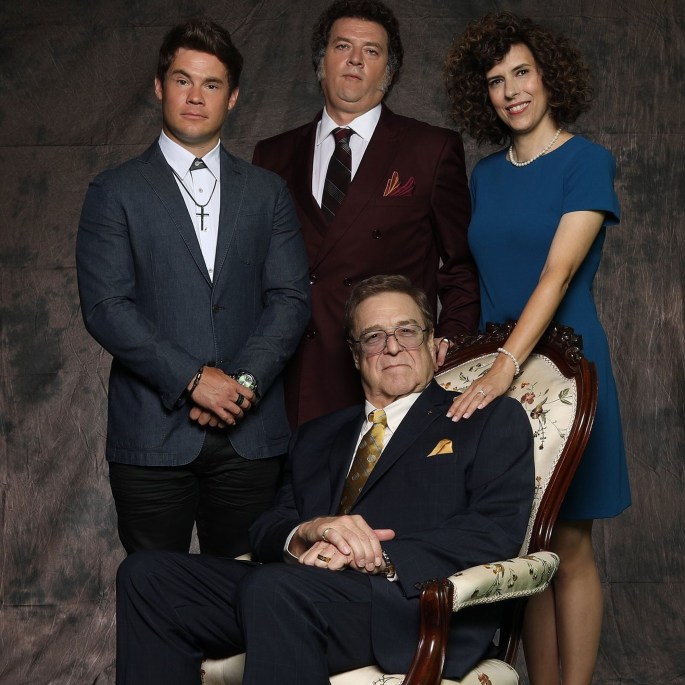
When I first saw Danny McBride, I thought he was a one trick pony. A guy who was really good at playing himself and didn’t have much range. But after following his career and one brilliant show/movie after another, he’s the real deal. And it’s no wonder why The Righteous Gemstones is a hit. The show was created, produced and and stars Mr. McBride, and follows a prominent televangelist family through their trials and tribulations. This show is nonstop laughter and definitely “Relatable”.

Episode 148: President Camacha

If you’re listening on iTunes, visit the site (TheRelatables.com), click on the Amazon banner and do all of your shopping through that link this holiday season. It costs you no extra money and it helps support the podcast! This week the guys talk hot lady presidents (Camacha not Camacho), invent a new marketing service and talk about Dean’s super busy week.

Stunna 4 Vegas – Up The Smoke (ft. Offset)

MC Kevin o Chris – Ela é do tipo (ft. Drake)

How Black Are You?

“Like what percentage, isn’t it like half?” – I’ve heard some variation of this question countless times throughout my life.  It’s not that I mind people’s curiosity about my background, it’s that I mind the pervasiveness of misinformation when it comes to race vs ethnicity vs nationality…I have also noticed how many times I’ve had to hear someone else answering the background question with the coveted, “I’m 1/4 Egyptian, 1/4 Italian, 1/12 Jewish, 1/19 Irish, 1/256 Greek”…One, no one cares that freaking much when they ask…and two…okay maybe it’s just me that doesn’t care that much? Just say you’re white and/or black etc and call it a day?
Alright, there’s actually a number of things that bug me about this topic actually, so here’s just a short list to correct some potential myths. They’re not even opinion based so hear me out! 
1. You can’t know “what percentage” of any race you are based on what your parents are. Say your dad is black and white because he has a white mother and a black father.  That does not automatically mean he is half and half, or that you’re a quarter of each.  Genetics don’t work like that.  You can absorb more or less of either side (i.e. 30% black, 60% white or vice versa).  Same with your siblings.  Your full-sister can be genetically “blacker” or “whiter” than you.  
2. Your nationality/ethnicity is NOT your race.  If I say I’m Puerto Rican, or American for that instance, that’s not telling you my race.  If someone says they’re German, you probably automatically picture a white person – however, there are black Germans.  There are black Puerto Ricans, white ones, and generally hella mixed ones. There are black Spaniards, there are white Africans…You get it.
3. Companies like 23andMe, Ancestry, MyHeritage have a ways to go regarding accuracy of genealogy reporting. These companies simply compare your DNA to the DNA of other people with known ancestries.  In doing so, they look for evidence that you have common ancestors with people in the specified reference group (Spanish people for example).  The problem arises though, when we consider that every company uses a different reference group, and these reference groups are changing all the time.  This means you could easily get a result from one company that says you’re 3x more Polish than the other company reports.  What’s more is that the reference group information available for certain ethnicities is lacking, where it is mostly abundant in European/white data points.  Over time, the hope is that the more people participate, the more accurate the reporting will become across all ethnic groups.
That’s my hope at least, since I successfully transcended through ALL 5 stages of grief after my 23andMe pegged me as 60% white (with a Rican mom and biracial dad).  Until then, I’m making my first casserole and dry turkey this Thanksgiving. Trying to embrace this potential newfound identity.